A calm, confident Thanksgiving—made with little helpers
Why chores during the holidays build independence
Thanksgiving is a perfect moment to invite kids into the rhythm of the home. Short, safe chores help children practice responsibility, build confidence, and feel like meaningful contributors to the day—without adding chaos to your kitchen. This guide gives parents a calm, practical plan: five themed chores with clear steps, safety reminders, and quick tools so the whole house feels more coordinated.
How Destination Sitters supports families and hosts
Families and planners often need an extra set of hands. Destination Sitters helps families and planners arrange babysitting, wedding childcare, event childcare and pet sitting. For context on services, visit the Destination Sitters homepage. This article shows which kid-friendly tasks fit a Thanksgiving flow—and where supervised support can make the holiday smoother.
Quick list: Thanksgiving chores kids can do today
- Make gratitude place cards (name + doodled leaf + one “thankful for” note).
- Set the table (plates, napkins, flatware, and a kid-friendly centerpiece).
- Wash veggies and portion safe snacks (no knives or heat for young kids).
- Run a welcome station (greet guests, coats, sanitizer, pet check-in).
- Lead crumb patrol and kid-table reset (wipe, sweep, recycle, tidy toys).
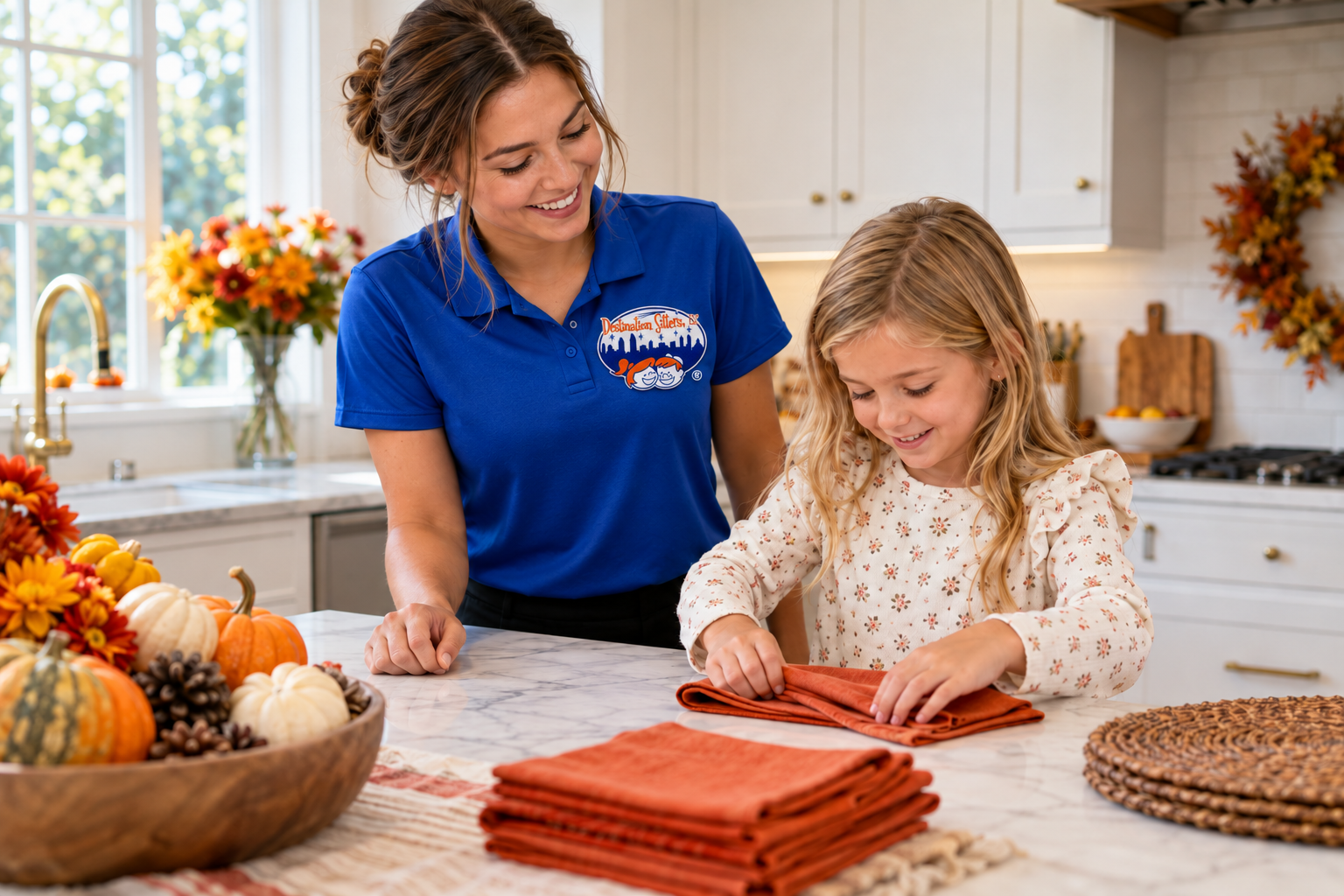
A quick, confidence-building job: folding festive napkins together.
Key takeaways
- Short, themed chores make kids feel included while building independence.
- Prep safe stations, rotate roles every 5–15 minutes, and supervise when tools are used.
- Use upbeat music, small choices, and specific praise to keep motivation high.
- Consider a sitter for mixed-age groups or hotel/event logistics so parents can host with less stress.
5 Thanksgiving-themed chores kids can actually do
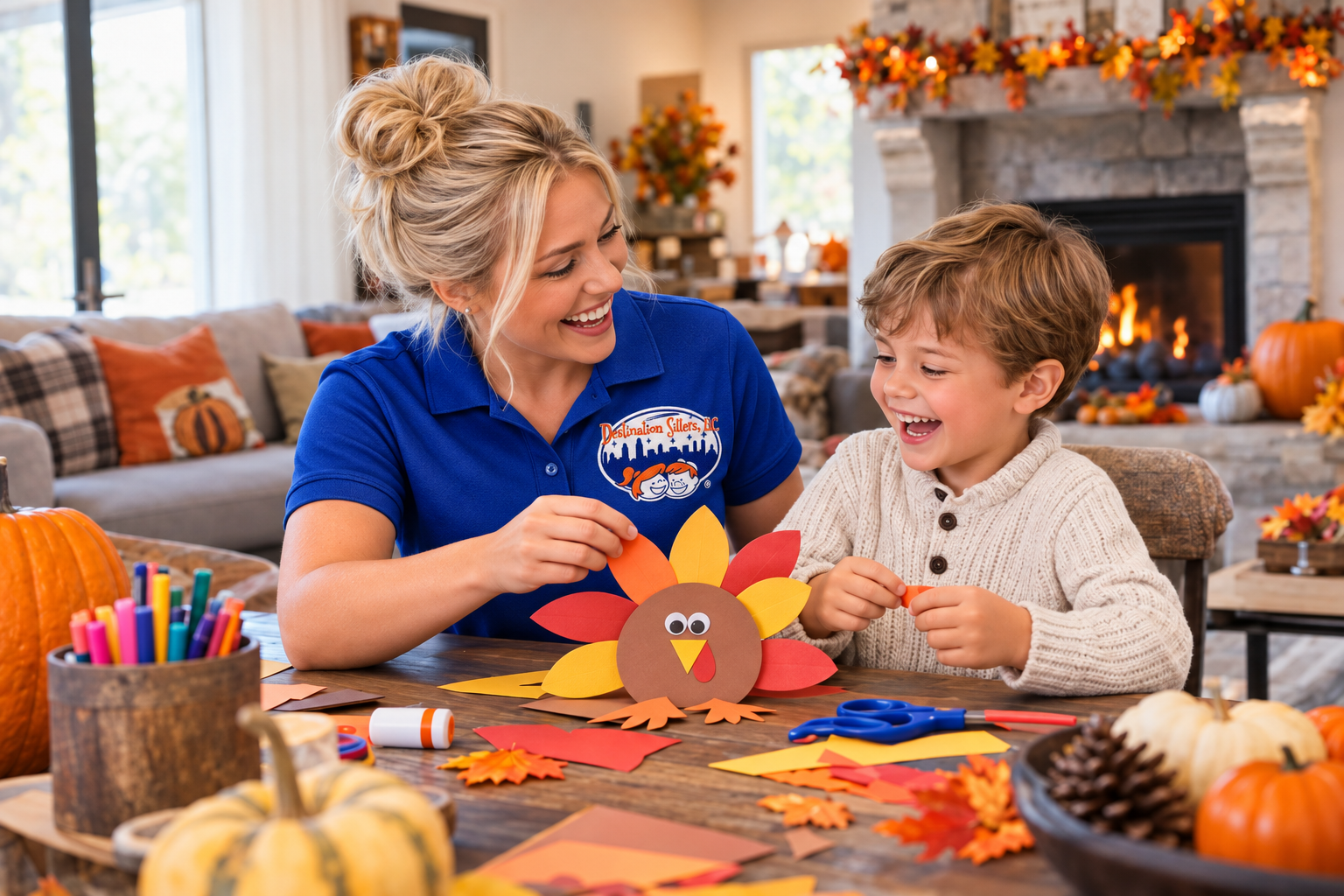
1) Gratitude place cards: names, a doodled leaf, and one ‘thankful for’ note
Turn arrival-time energy into a quick craft that personalizes the table.
- Mini-tasks: Fold cardstock, write each name, doodle a small leaf, and add one thankful note per card.
- Tools: Pre-cut cardstock, markers or crayons, child-safe scissors, tape or a glue stick.
- Safety notes: Use child-safe scissors; seat kids at a well-lit table; avoid glitter if allergies or sensory sensitivities are a concern.
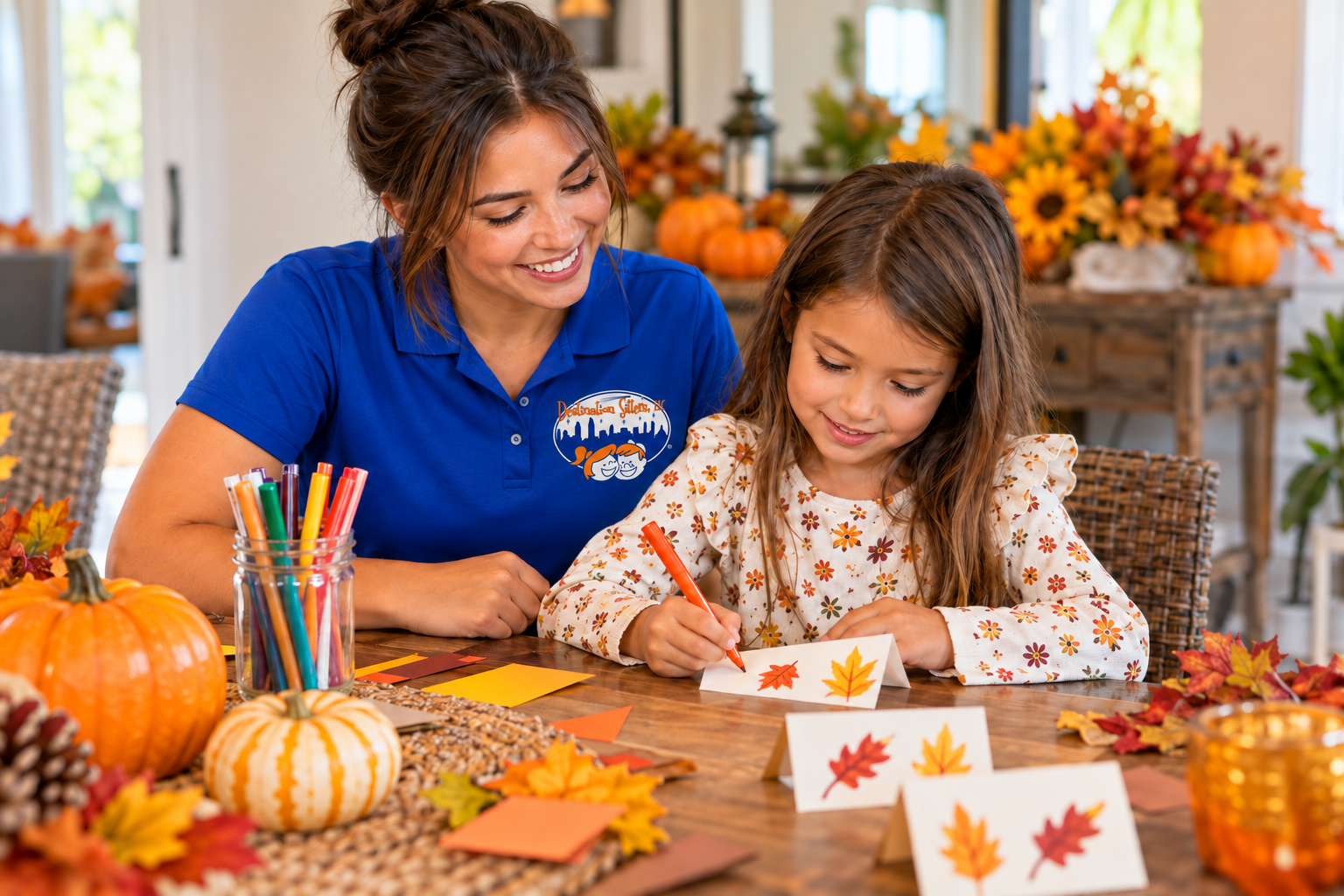
Gratitude place cards turn creativity into a holiday chore kids love.
2) Set-the-table squad: plates, napkins, flatware, kid-friendly centerpiece
Assign a “host in training” to make the table inviting.
- Mini-tasks: Count place settings; lay plates, napkins, and flatware; place water cups; add a low, kid-friendly centerpiece (small pumpkins, leaves, battery candles).
- Tools: A tray or caddy for carrying items, placemats or chargers, cloth napkins.
- Safety notes: Keep breakables in adult hands; avoid candles with real flames; show kids where hot dishes will go and mark a no-go zone.
3) Produce & pantry helper: wash veggies and portion safe snacks
Give kids a sink station and simple measuring jobs that avoid heat and sharp tools.
- Mini-tasks: Rinse carrots and celery; spin salad greens; portion crackers, pretzels, or fruit into small bowls; measure spices for a rub with adult oversight.
- Tools: Step stool, colander, salad spinner, measuring spoons, towels.
- Safety notes: No sharp knives or hot surfaces for young kids; supervise any use of peelers or graters; enforce handwashing before food tasks.
4) Welcome station captain: greet guests, coats, hand sanitizer, pet check-in
Put social butterflies in charge of hospitality.
- Mini-tasks: Offer a warm hello; point to the coat spot; share sanitizer; show guests a shoe basket; remind “please ask before petting” if there are pets.
- Tools: Small bench or hook area, tissues, sanitizer, a sign with simple icons for younger readers.
- Safety notes: Review boundaries with pets; build in handwashing after greetings and before snacks; avoid blocking doorways or stairs.
5) Crumb patrol & kid-table reset: wipe, sweep, recycle, and toy tidy
After snacks or dessert, kids can lead a quick reset.
- Mini-tasks: Wipe the kid table; sweep crumbs with a hand broom; collect cans for recycling; gather toys into a labeled bin; reset napkins and cups.
- Tools: Microfiber cloths, non-toxic spray, hand broom and dustpan, a small recycling tub, a toy basket.
- Safety notes: Avoid heavy lifting; teach safe broom handling; check spray labels and supervise use.
Age-by-age guide: matching chores to growing skills
Ages 3–5: sorting napkins, placing name cards, soft wipe-downs
Young helpers love short, tangible jobs. Try folding napkins, handing out place cards, carrying napkin rings in a basket, or doing a gentle table wipe with water only. Aim for 5–7 minute sprints, then rotate.
Ages 6–8: table setting, veggie wash station, welcome checklist
This group can handle a sequence: plate-napkin-fork-cup, then centerpiece placement. They can rinse greens, spin salad, and portion dry snacks. Greeter roles also shine here. Aim for 8–12 minutes per task with one check-in.
Ages 9–12: simple measuring, centerpiece styling, crumb patrol leadership
Pre-teens are ready for simple measuring (spices, dressings) with supervision, and they can style a low centerpiece, manage crumb patrol, and coach younger siblings. Plan 10–15 minutes per task, plus a second pass to tidy.
Teens: music + timing manager, guest coordinator, post-meal reset lead
Teens can manage playlists, timers, and the guest flow, plus lead the post-meal reset. Consider a rotating schedule to keep things moving without anyone feeling stuck on one job.
Set kids up for success and safety
Prep simple stations: caddies, checklists, and safe tools
Pack a caddy with labeled cloths, a hand broom, non-toxic spray, and child-safe scissors. Use one-page checklists with icons for non-readers. Keep trays for moving stacks of napkins or cups.
Allergy-aware and sensory-friendly tips
Label ingredients on shared snack trays. Offer quiet tasks (place cards, folding) for kids who prefer less noise. Avoid fragrances and glitter if allergies or sensitivities are common.
Clear zones: hot surfaces, knives, and crowd paths
Mark a visual boundary around the stove and oven and identify a knife-only prep zone for adults. Map room flow so kids working at the table won’t cross hot or crowded paths.
Pet plan: greetings, boundaries, and handwashing
Review pet greetings (“ask before petting”), set a no-pet eating area, and cue a handwash after contact. Assign a pet water check to an older child if appropriate.
Keep it motivating: make chores feel festive
Micro-wins: 10-minute timers and upbeat playlists
Set a visible timer and pair chores with a cheerful playlist. End with a quick “show-and-tell” of the finished job so kids see their impact.
Small choices, big buy-in: pick between two jobs
Offer two options at a time: “place cards or napkin folding?” A little autonomy fuels cooperation.
Warm praise scripts that build independence
Keep praise specific and effort-focused: “You counted every fork—our table looks ready.” “You remembered sanitizer for each guest. That was thoughtful.”
Hosting a crowd? How Destination Sitters can help
Big gatherings often mix nap schedules, cousins, and travel fatigue. A sitter can supervise craft stations, snack prep, and play breaks while adults cook, greet, and plate. For at-home or hotel stays, explore babysitting options. Planning Friendsgiving or a community potluck? See event childcare for help setting up a quiet corner, safe craft table, and age-aware supervision. If the holiday includes “I do,” check out wedding childcare to keep young guests engaged during photos and toasts. For direct scheduling, families often start at booking, and planners can review background information on about us, browse reviews, or contact us with event details.
Why families choose Destination Sitters
Parents and planners value practical, coordinated support that fits real-life logistics—from hotels and vacation rentals to weddings and seasonal events. Helpful touches include clear handoffs at front desks, allergy and routine notes shared up front, and kid-friendly room layouts that keep the holiday safe and fun.
- Flexible scenarios: hotel/resort stays, vacation rentals, weddings, and events.
- Mixed-age awareness: age-appropriate activities and supervision.
- Room planning: quiet corner, crafts, and a small-play space away from hot zones.
- Communication norms: check-ins and reachable contact info for guest parents.
Key takeaways
- The five: gratitude place cards, table setting, veggie/snack station, welcome captain, crumb patrol.
- Prep stations and mark no-go zones around heat and knives; supervise tools.
- Timers, choices, and specific praise keep kids engaged and proud.
- For crowds or travel, consider a sitter to streamline the day.
Conclusion
With a few simple stations and clear cues, kids can help create a warm, well-run Thanksgiving—and build independence along the way. Keep chores short, safe, and celebratory, and lean on outside help when the guest list grows. Here’s to a holiday full of gratitude, confidence, and calm family time.
FAQs
What’s a good age to start Thanksgiving chores?
Start simple tasks at ages 3–5 (sorting napkins, place cards) and build up with supervision as attention and skills grow.
How do I make chores feel fun, not like punishment?
Use 5–10 minute timers, upbeat music, small choices between two jobs, and warm, specific praise for effort.
How can I keep kids safe around hot ovens and knives?
Create clear ‘no-go’ zones, assign cool tasks (washing produce, place cards), and supervise any age using tools.
What if my child has allergies or sensory needs?
Choose low-exposure tasks, label ingredients, and share allergy and comfort details with any caregiver or sitter.
How long should each chore take?
Aim for short sprints: 5–10 minutes for younger kids and up to 15 minutes for older kids; rotate to prevent fatigue.
We’re staying at a hotel—what chores still work?
Portable options like place cards, welcome notes, and tidy-up sprints travel well. A sitter can help with safe, supervised activities.
Share This Article!
About the Author: Yvonne Wonder